How to choose the NdFeB magnet that suits your needs?
1. What is theNdFeB magnet?
NdFeB magnets are mainly composed of the rare earth element neodymium (Nd), iron (Fe), and boron (B), and are usually simply referred to as NdFeB. This is a magnetic material formed through a series of complex processes including blank production, machining, and surface treatment.
2. Why are NdFeB magnets better than ordinary magnets?
(1) Strong magnetism
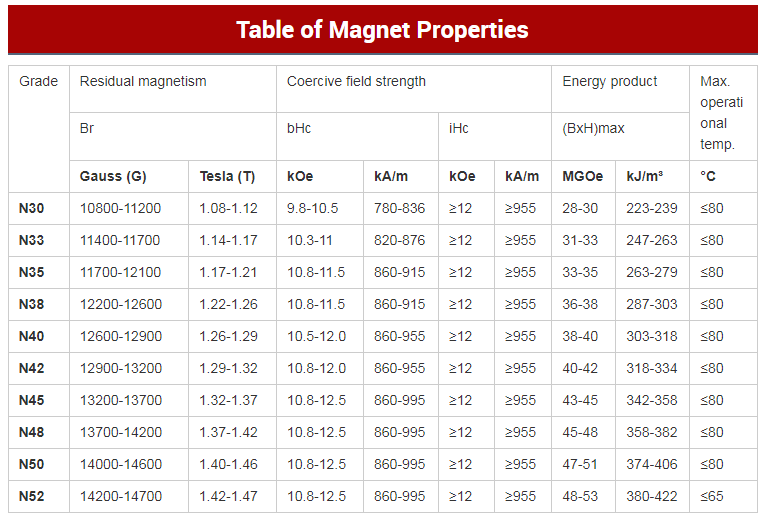
The magnetic energy (BHmax) of NdFeB magnets is much higher than ordinary magnets, even several times higher than ferrite magnets. So it also has a title of “King of Magnets.” With the same volume or weight, NdFeB magnets can store and release more magnetic energy and generate a stronger magnetic field. Devices using this magnet can be made more compact.
(2) High cost-performance ratio
Due to powerful magnetic properties, NdFeB magnets allow the use of smaller, lighter ones to replace larger ordinary magnets in product design. This reduces the overall weight and material cost of the product to a certain extent.
(3) Good mechanical properties
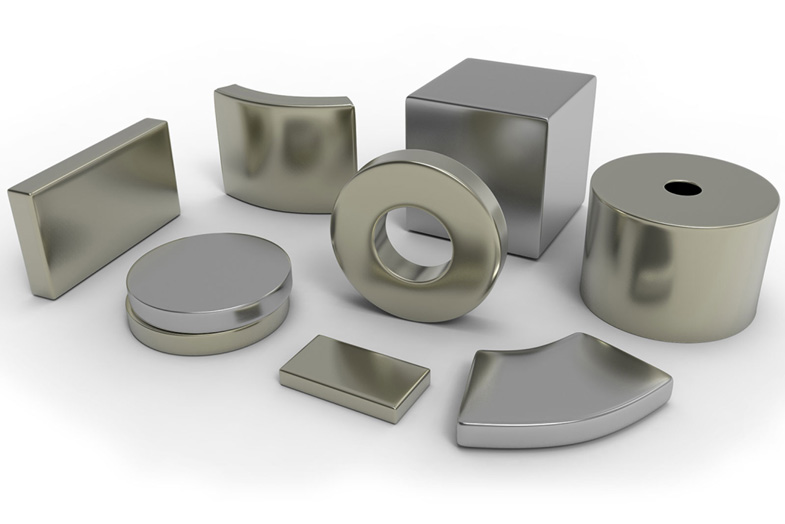
NdFeB magnets are easy to machine when manufacturing magnetic components with complex shapes. Normally, ordinary magnets have poor machinability and are prone to cracking or deformation during processing. However, NdFeB magnets can be precisely processed into the required shape and size through conventional processing methods such as cutting, drilling, and grinding, meeting complex shape requirements and being used in more products.
(4) Multiple application scenarios
Ordinary magnets are prone to weakening or demagnetization in extreme or complex environments, affecting product use and life. NdFeB magnets overcome this problem. They have a variety of properties and grades to cope with different ambient temperatures and humidity. Whether it is a low-temperature environment or a high-temperature car engine compartment, whether it is a humid marine environment or a dry desert area, there are suitable NdFeB magnets to choose from.
3. How long can NdFeB magnets be used?
The life of NdFeB magnets is affected by many factors such as the environment, working temperature, magnetic field strength, surface treatment, etc. Under normal working conditions, the life of NdFeB magnets is usually about 10 to 20 years.
(1) Operating environment
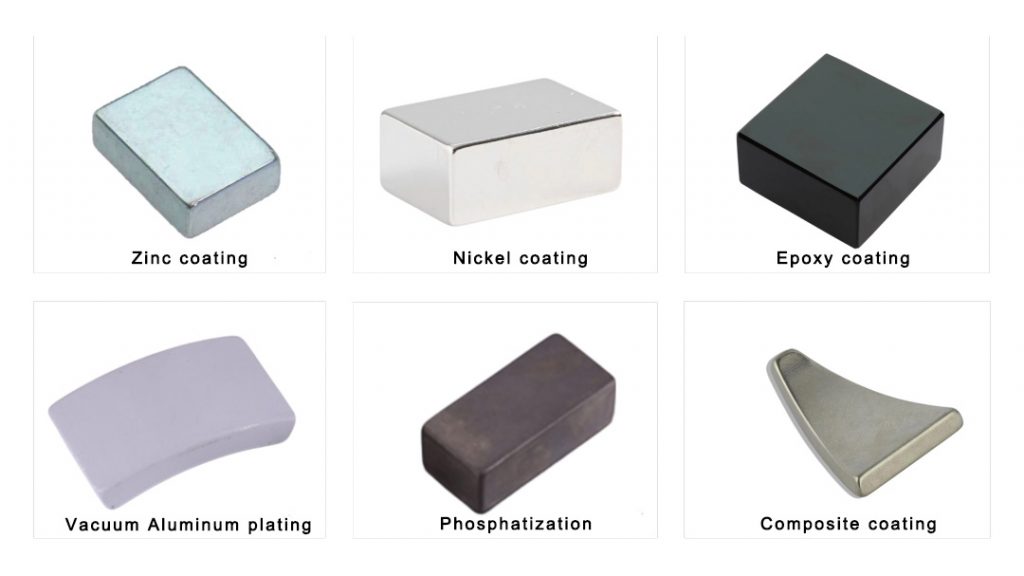
Due to the material composition, sintered NdFeB magnets have poor corrosion resistance. In a humid environment or when exposed to corrosive gases/chemicals, their surface is easily oxidized and corroded, reducing magnetic properties and shortening service life. Therefore, NdFeB magnets are usually surface treated to isolate the magnets from air and corrosive substances and extend their service life. Common surface treatments include zinc plating, nickel plating, nickel-copper-nickel plating, and epoxy resin.
(2) Working temperature
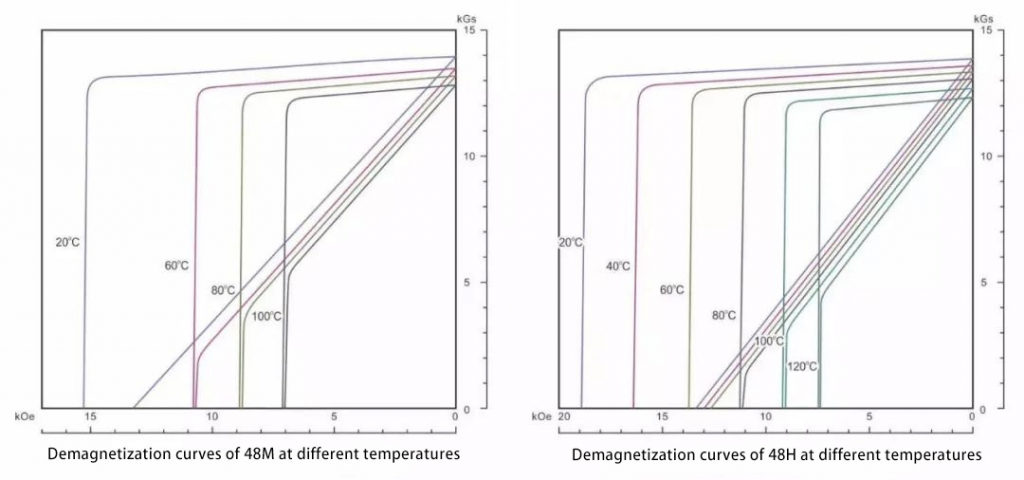
Magnetic performance decreases significantly with increasing temperature. The operating temperature range of NdFeB magnets is typically 80°C to 200°C. If the operating temperature of the magnet exceeds its limit, the magnetic strength will weaken over time, and irreversible demagnetization will occur, which will cause equipment failure.
4. What is the price of NdFeB magnets?
The price of NdFeB magnets is affected by many factors. This article mainly lists the 2 most important factors.
(1) Size
Under the same performance, the larger the size of the NdFeB magnet, the higher the material cost. Also the larger the size, the more precise the production process and the more advanced the equipment are needed to ensure the quality, increasing the production cost. At present, the size of NdFeB magnets is generally measured in millimeters, and the length in the magnetization direction is generally not more than 60 mm.
(2)Performance
The performance indicators of NdFeB magnets mainly include residual flux density (Br), coercive force (Hc), intrinsic coercive force (Hci) and maximum magnetic energy product (BHmax). The larger the grade number, the higher the performance and the higher the price. For example, the N35 grade has lower performance and is more affordable, and it is also the most commonly used NdFeB magnet. The N52 grade has a magnetic energy product 30-50% higher than the N35 grade, requiring purer raw materials and more advanced manufacturing processes, so the price is several times higher. Special grades such as N52UH and N42SH will also incur additional costs due to complex alloy composition and process.
5. How to export high-performance NdFeB magnets under rare earth control policy?
(1) Export restriction status
The Ministry of Commerce and the General Administration of Customs of China jointly issued an announcement on April 4, 2025, announcing export controls on high-performance NdFeB permanent magnet materials containing terbium (Tb) and dysprosium (Dy). All NdFeB magnets must provide a test report showing that they are free of Dy and Tb when exported.
(2) Export strategies
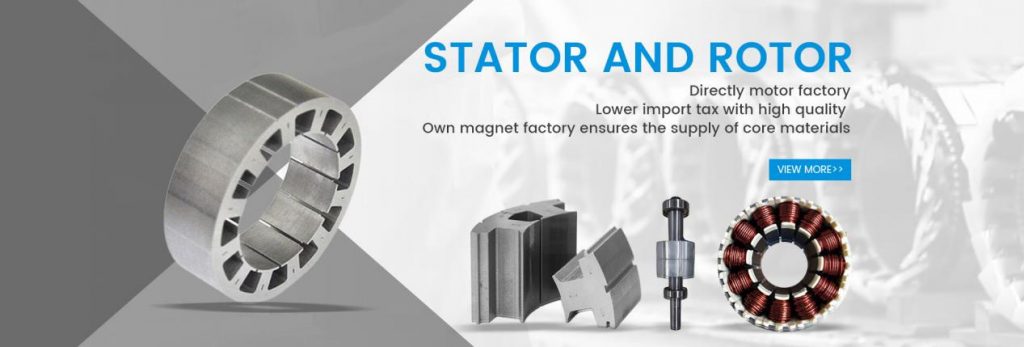
We have independent R&D and production capabilities for magnetic materials. From material development to production, we ensure material performance and quality. We provide export solutions for rotors/stators containing controlled rare earth magnetic materials (currently only applicable to controlled rare earth alloys), helping customers avoid rare earth export restrictions.
Main product forms:
Providing finished or semi-finished rotors/stators containing controlled rare earths, including surface-mounted rotors, external rotors, and interior rotors.
Conducting customized design and production based on drawings provided by customers.
Offering various forms of standalone rotor products, wound stators, and fully assembled complete motors.