Neodymium Magnets: The “Super Heart” of Wind Power Generation
I. The “Permanent Magnet” Trend in Wind Power Generation

Against the backdrop of the global energy transition, wind power generation is a clean and renewable energy source. The technology of wind power generation is constantly innovating, among which the trend of permanent magnetization is particularly remarkable. The application of permanent magnet technology in wind power generation not only improves power generation efficiency but also reduces operation and maintenance costs, becoming an important direction for the development of wind power generation.
The 2025 report released by the International Renewable Energy Agency (IRENA) shows that the market share of direct-drive permanent magnet wind turbines using sintered neodymium-iron-boron magnetic steel has increased significantly, reaching 68%, an increase of 23% compared with 2020. This data fully demonstrates that the important position of permanent magnet technology in the field of wind power generation is becoming increasingly prominent. The rapid growth of this market share benefits from the many advantages of permanent magnet technology in wind power generation.
II. Advantages of Neodymium Magnets in Wind Power Generation
(I) High Energy
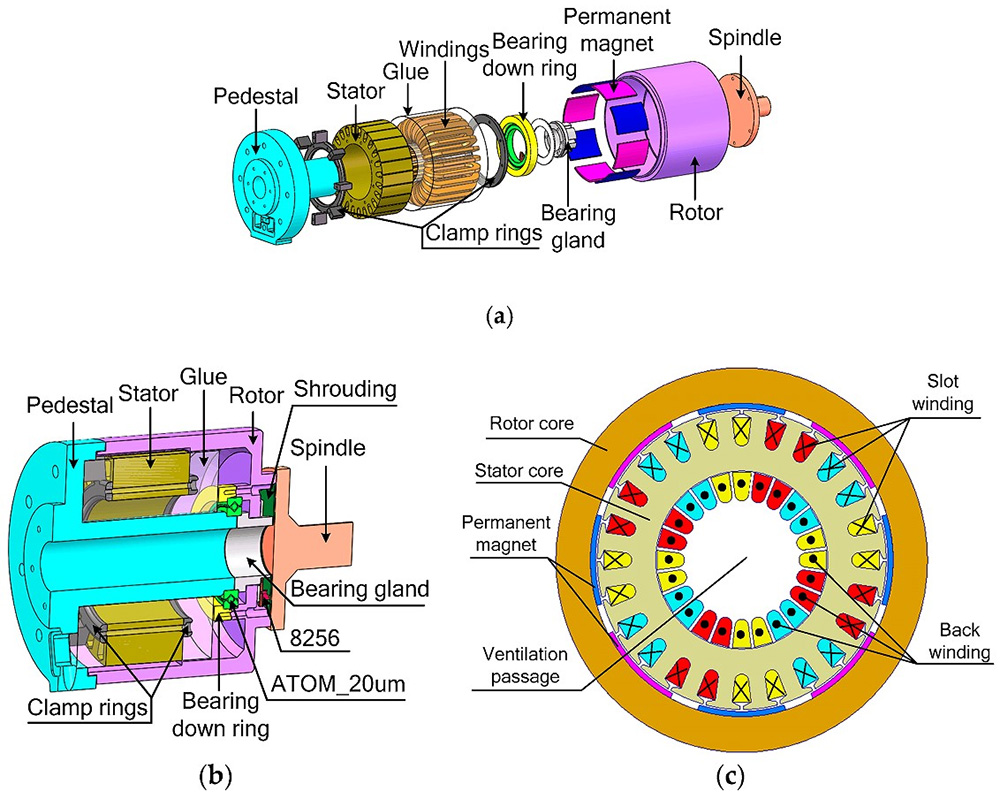
Traditional doubly-fed asynchronous wind turbines need to be equipped with complex gearboxes and brush systems, while direct-drive permanent magnet wind turbines eliminate these components and use permanent magnet materials to directly generate magnetic fields, achieving efficient conversion of mechanical energy into electrical energy. This change not only simplifies the structure but also greatly improves power generation efficiency.
Magnetic energy product is a key indicator to measure the energy storage capacity of magnets. The higher the value, the more energy the magnet can store and release per unit volume. Taking the N52 grade neodymium-iron-boron magnet as an example, compared with traditional ferrite materials, the power generation efficiency is increased by 15%. In practical applications, direct-drive permanent magnet wind turbines using N52 grade neodymium-iron-boron magnets can generate more electrical energy under the same wind speed conditions, providing a more stable power supply for the power grid.
(II) Low Failure Rate
The elimination of the gearbox structure in direct-drive permanent magnet wind turbines is the key to reducing the failure rate and optimizing operation and maintenance costs. In traditional doubly-fed asynchronous wind turbines, the gearbox undertakes the important task of speed increase, converting the low-speed rotation of the wind turbine into the high-speed rotation required by the generator. The structure of the gearbox is complex, containing many components such as gears and bearings. During long-term operation, these components are easily affected by factors such as wear and fatigue, resulting in frequent failures. According to statistics, gearbox failures are one of the main sources of failures in traditional wind turbines, accounting for more than 40% of the total downtime.
Direct-drive permanent magnet wind turbines directly connect the wind turbine to the generator, and the rotation of the wind turbine directly drives the rotation of the generator rotor without the need for a gearbox for speed increase. This structure simplifies the transmission system, reduces failure points, and the failure rate is 40% lower than that of traditional doubly-fed asynchronous wind turbines. This not only greatly reduces the number of equipment repairs and downtime but also reduces maintenance costs. Taking a wind farm with 100 wind turbines as an example, assuming that each traditional wind turbine has a downtime of 10 days per year due to gearbox failures and the maintenance cost is 50,000 yuan, the loss of the entire wind farm due to gearbox failures is as high as 5 million yuan per year. After adopting direct-drive permanent magnet wind turbines, the loss due to failures can be reduced to 3 million yuan per year, with significant economic benefits.
(III) Long Service Life
Under normal operating conditions, neodymium-iron-boron magnets have a service life of more than 25 years due to their excellent magnetic properties and stability. This long service life characteristic benefits from the characteristics of the material itself and advanced protection technologies. Neodymium-iron-boron magnets have high intrinsic coercivity and remanence and can maintain a stable magnetic field strength for a long time. Advanced protective coatings and processes effectively prevent the magnets from being eroded by the external environment, further extending their service life.
It is very important to conduct a coercivity attenuation test every 5 years to ensure the stable performance of the magnet during its entire service life. Coercivity is an important indicator to measure the demagnetization resistance ability of the magnet. Under normal circumstances, the coercivity attenuation should be less than 3%. If the attenuation exceeds this standard, it may mean that the magnet has been affected by external factors such as high temperature and corrosion, resulting in a decline in its performance. At this time, it is necessary to further evaluate the state of the magnet and take corresponding measures such as strengthening protection and adjusting operating parameters to ensure the normal operation of the wind turbine.
III. Selection of Magnetic Materials for Different Wind Power Generation
Different wind power generation scenarios, such as offshore wind power generation and onshore wind power generation, have different focuses on the selection criteria of magnetic materials due to the differences in their environmental conditions and operating requirements.
Offshore wind power generation, due to its unique marine environment, puts extremely strict requirements on magnetic materials.
- In terms of operating temperature, it needs to adapt to an environment from -40°C to 180°C. It not only requires the magnetic materials to maintain stable performance in a low-temperature environment to ensure the normal operation of the generator but also to avoid performance degradation under high-temperature conditions.
- The salt spray protection level is a key indicator for magnetic materials in offshore wind power generation, requiring ≥2000 hours. The salt spray in the ocean is rich in chloride ions and has extremely strong corrosiveness, which will erode the surface of magnetic materials and reduce their performance. Therefore, magnetic materials for offshore wind power generation must have excellent anti-salt spray corrosion ability to ensure the long-term stable operation of equipment in the harsh marine environment.
- The remanence (Br) of the magnet also needs to be ≥1.45T. A higher remanence can ensure that the generator can generate electricity efficiently even at low wind speeds, improving the utilization rate of wind energy.
In contrast, the environmental conditions of onshore wind power generation are relatively mild. The operating temperature range is generally between -30°C and 150°C, the salt spray protection level requirement is ≥1000 hours, and the remanence (Br) requirement of the magnet is ≥1.4T.
| Parameters | Offshore wind power requirements | Onshore wind power requirements |
| Operating temperature range | -40℃~180℃ | -30℃~150℃ |
| Salt spray protection level | ≥2000 hours | ≥1000 hours |
| Remanence of Magnet(Br) | ≥1.45T | ≥1.4T |
IV. Future Outlook
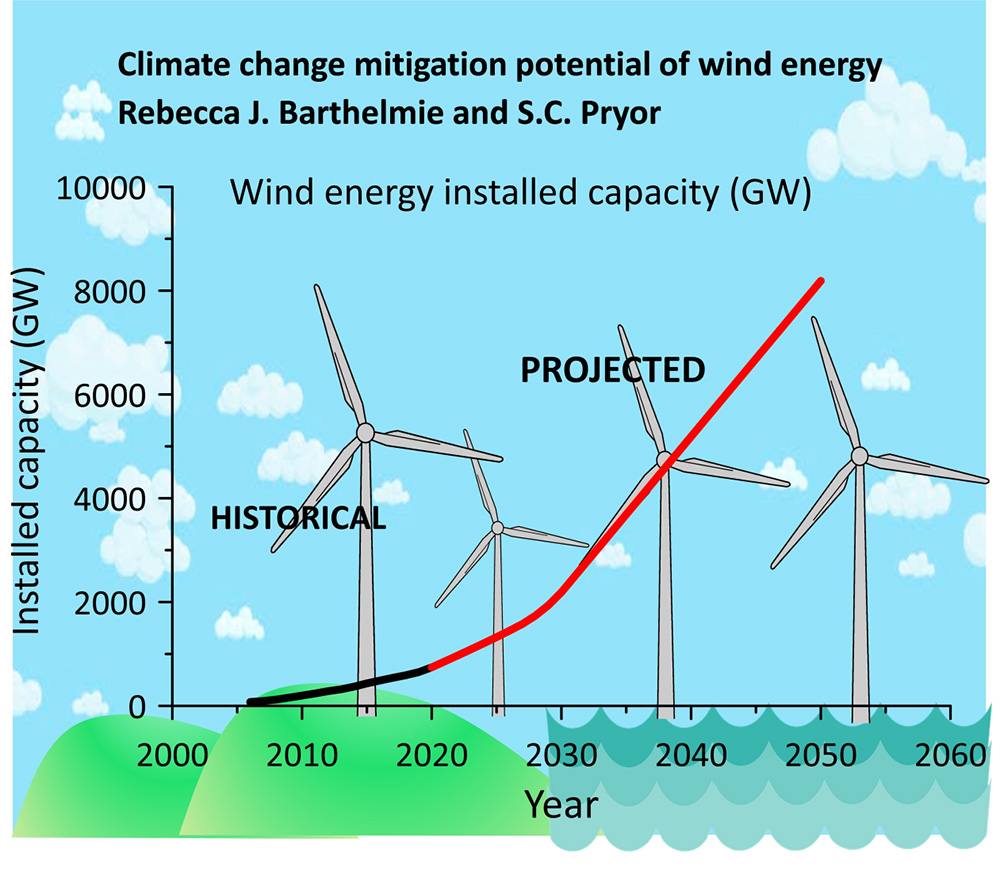
Neodymium-iron-boron magnets have become an indispensable core material in the wind power generation industry with their excellent performance and play an irreplaceable role in improving power generation efficiency and reducing operation and maintenance costs. With the continuous growth of the global demand for clean energy, wind power generation, as one of the most promising renewable energy sources, its market scale will continue to expand. According to the prediction of the International Energy Agency (IEA), by 2050, the global installed capacity of wind power generation is expected to reach tens of thousands of GW, which will bring unprecedented development opportunities to the neodymium-iron-boron magnet market.